



Study in New Zealand
Visa Options, Work Rights & Education Providers
To study in New Zealand for more than three months, most international students need a student visa. Learn how to apply for a student visa, study and work in New Zealand, bring your family, and explore post-study options.

simple process
Education-to-Residence Pathway for Studying in NZ
For many international students, studying in New Zealand is not just about the qualification — it is the first step in a planned pathway to permanent residence. Understanding this pathway before you enrol is critical, because the course you choose and the qualification level you complete directly determine your post-study options.
Not every course leads to residence. Short courses, lower-level qualifications, and programmes at providers without Pathway or post-study work eligibility may leave you with no onward pathway. This is exactly why getting professional advice before you enrol is so important. New Zealand Shores helps you choose a course and provider that aligns with your long-term immigration goals — not just your study plans.
Free Eligibility AssessmentNot every course leads to residence. Short courses, lower-level qualifications, and programmes at providers without Pathway or post-study work eligibility may leave you with no onward pathway. This is exactly why getting professional advice before you enrol is so important. New Zealand Shores helps you choose a course and provider that aligns with your long-term immigration goals — not just your study plans.
.splide__track {
  overflow: initial !important;
}
New Zealand Student Visa Types
New Zealand welcomes thousands of international students each year to study at its universities, polytechnics, private training establishments, and schools. There are several types of student visa — including the standard Fee Paying Student Visa, the Pathway Student Visa (covering up to three consecutive courses on a single visa), and the Dependent Child Student Visa for school-age children of visa holders. Students enrolled at level 4 or above on the New Zealand Qualifications and Credentials Framework can work up to 25 hours per week during term and full-time during scheduled breaks. After graduating, eligible students can apply for a Post-Study Work Visa or the new Short Term Graduate Work Visa — and if they secure employment in a role on the Green List or meeting Skilled Migrant Category criteria, they can apply for permanent residence.
Choosing the right course, the right provider, and the right visa type is critical. The wrong combination can close off work rights, family visa options, and pathways to residence. New Zealand Shores is a licensed immigration advisory and authorised education agent that guides international students from course selection through to visa approval — and beyond, into post-study work and residence planning.

.brxe-mrcdab{
  background-color: #F1F5F9;
}Not sure where to start?
New Zealand Shores is a licensed immigration advisory and authorised education agent. Our team includes staff who speak multiple languages and have direct experience with the international student journey. Our end-to-end student service covers:
- Course and provider selection: We recommend courses that match your goals. We are authorised agents for leading NZ tertiary providers and handle your enrolment directly.
- Student visa application: We prepare and lodge your student visa application, ensuring every document is complete, correctly formatted, and submitted on time.
- Family visa applications: If you are bringing your partner or children, we manage their visa applications alongside yours.
- Work rights guidance: We make sure you understand your work conditions before you arrive, so you can plan your finances and avoid breaching your visa.
- Post-study planning: Before you even graduate, we advise on your post-study work visa options and help you plan the next step towards residence.
- Licensed and regulated: We are regulated by the Immigration Advisers Authority. Your adviser is legally qualified and professionally accountable.


comparison
Compare Your Study Visa Options
Quickly understand the difference between common study visa types and find the best fit for your plans.
| Visa Type | Duration | Work Rights | Can Bring Family | Leads to Post-Study Work Visa |
|---|---|---|---|---|
| Student Visa | Up to 4 years | Up to 25 hrs/week |
 Yes
Yes
|
Yes
|
| Pathway Student Visa | Up to 5 years | Up to 25 hrs/week |
Yes
|
Yes
|
| Exchange Student Visa | Duration of exchange |
 No
No
|
No
|
No
|
| Dependent child Student Visa | Per school year | Up to 25 hrs/week |
Yes
|
No
|

How Much Does It Cost to Study in New Zealand?
Costs vary significantly depending on your qualification level, institution, and location. The table below provides indicative ranges for 2026.
<trVisa application fee$375 (online)Plus immigration levy of $25.60
| Cost Item | Indicative Range (NZD) | Notes |
| Tuition — English language | $300–$450 per week | Varies by provider and course length |
| Tuition — Certificate/Diploma | $12,000–$25,000/year | PTEs and polytechnics |
| Tuition — Bachelor’s degree | $22,000–$35,000/year | University dependent; health sciences higher |
| Tuition — Postgraduate | $26,000–$70,000+/year | Engineering and medical programmes at top end. PhD programmes the cheapest post-grad options |
| Living costs (INZ minimum) | $20,000/year | INZ requires evidence of this amount |
| Medical insurance | $500–$700/year | Approved providers; some institutions include it |
| Visa Application Fee | $750 | Varies depending on visa category |
| Medical examination | $300–$500 | If required based on nationality/course length |
.brxe-ohbzff{
  background-color: #F1F5F9;
}
trusted institution
Recommended Education Providers
Explore top universities and institutes across New Zealand that welcome international students — from foundation programmes to postgraduate degrees.
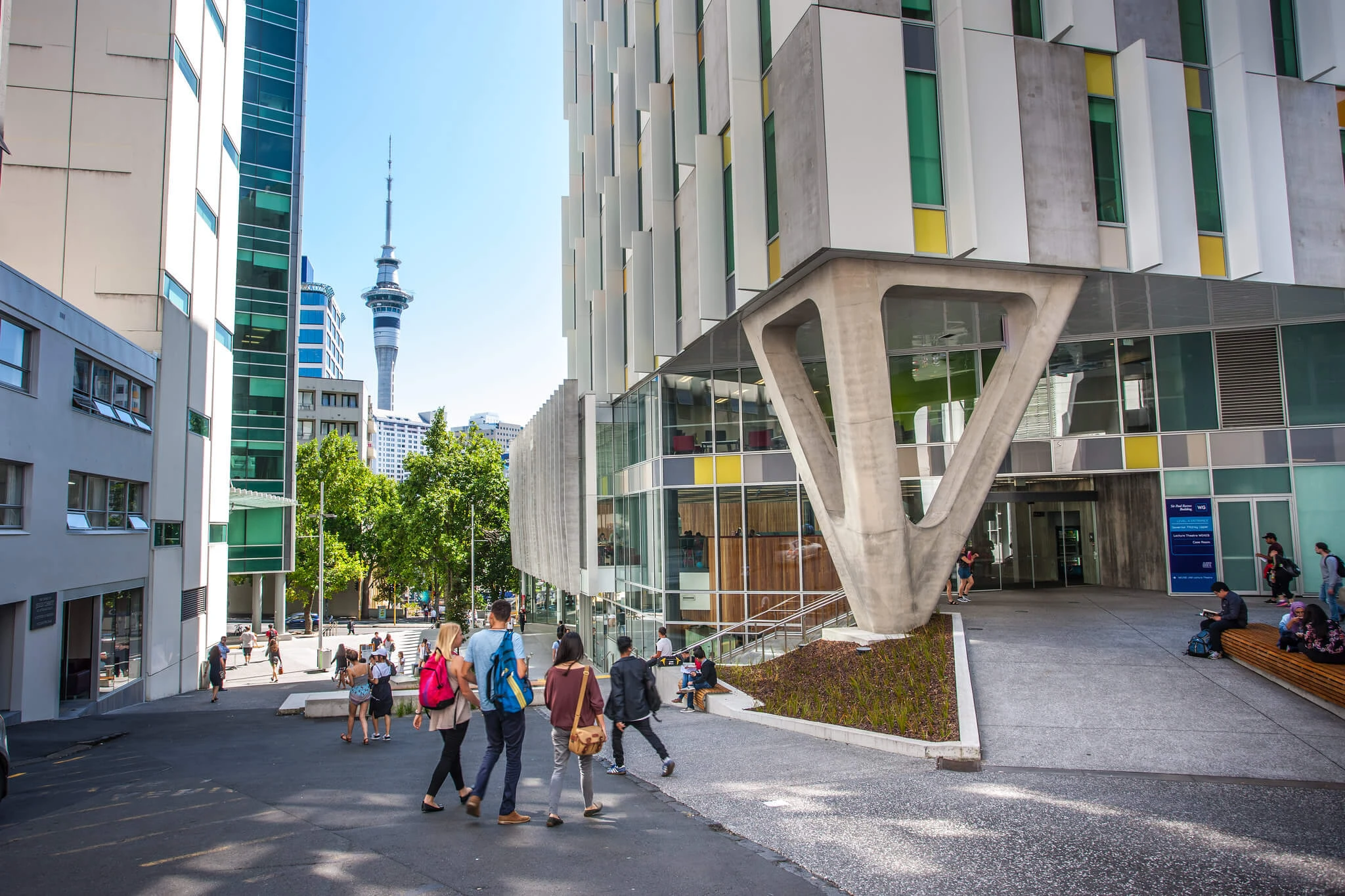
Auckland University of Technology
One of New Zealand’s highest-ranked university, offering a wide range of programmes.
View Profile
Victoria University of Wellington
Known for research, law, and international relations — right in the heart of New Zealand’s capital.
View Profile
Otago Polytechnic
A leading vocational education provider with practical training and strong employer links.
View Profile

Waikato Institute of Technology
Offers career-ready qualifications in health, engineering, IT, and creative industries.
View Profile
Frequently Asked Questions About Studying in New Zealand
How much does it cost to study in New Zealand?
Tuition fees for international students range from approximately NZD $20,000 per year for certificate and diploma programmes to NZD $50,000+ per year for postgraduate programmes. On top of tuition, Immigration New Zealand requires you to demonstrate at least NZD $20,000 per year in living costs. You must also maintain medical insurance (approximately NZD $500–$700 per year) and pay a visa application fee.
Can I work while studying in New Zealand?
Yes. If your course is full-time, at least one academic year long, and results in a level 4+ NZQCF qualification, you can work up to 25 hours per week during term and full-time during scheduled breaks. Master’s research and doctoral students can work unlimited hours. Self-employment is not permitted. The 25-hour limit was introduced in November 2025, replacing the previous 20-hour limit. Some exceptions apply! It’s always a good idea to check with your agent if the course you are choosing will allow you to work and/or meet your immigration goals.
Can I bring my family on a student visa?
It depends on your qualification level. If you are studying at level 7 or above in a qualification on the Green List, or at level 9–10 (master’s or doctoral), your partner may qualify for a work visa with open work rights. Your children can apply for a Dependent Child Student Visa to attend school.
Can studying in New Zealand lead to permanent residency?
Yes. This is one of the most popular pathways to New Zealand residence. After completing a qualification at level 7 or above, you can apply for a Post-Study Work Visa (1–3 years), find employment with an accredited employer, and then apply for residence under the Skilled Migrant Category or Green List pathway if your role qualifies. The course you choose and the qualification level you complete directly determine whether this pathway is available to you.
Do I need to take an English test like IELTS to study in New Zealand?
It depends on your nationality and your chosen programme. Many providers accept IELTS, TOEFL, PTE Academic, or Cambridge English results. Some providers have their own English proficiency assessments. If English is your first language or you have completed prior study in English, you may be exempt. Minimum scores vary by programme — typically IELTS 5.5 for certificates/diplomas and IELTS 6.0–6.5 for degrees. Professional programmes (nursing, teaching) may require higher scores.
What is the Pathway Student Visa?
The Pathway Student Visa allows you to study up to three consecutive programmes on a single visa, for up to five years. For example, you could start with an English language course, move into a diploma, and then complete a degree. all on one visa. This saves time and application fees compared to applying separately for each programme. The visa is only available through approved Pathway Education Providers.
What is the Post-Study Work Visa?
The Post-Study Work Visa is an open work visa that allows graduates of New Zealand qualifications to stay and work after completing their studies. The duration depends on the level of your qualification and, in some cases, where you studied. Level 7 bachelor’s degrees typically qualify for a 3-year post-study work visa. From late 2026, a new Short Term Graduate Work Visa (6 months) is also available for graduates of level 7 Graduate Diplomas who hold a bachelor’s degree.
How long does a New Zealand student visa take to process?
Most student visa applications are processed within 4 to 8 weeks, but processing times vary by nationality and time of year. Peak intake periods (October–January for February start dates) are typically slower. Immigration New Zealand recommends applying at least three months before your intended travel date. Submitting a complete application with all required documents is the best way to avoid delays.
help resources
What Else Do You Need to Know?
Explore practical guides and student support content to help you prepare,
settle in, and succeed during your time in New Zealand.

What is a Domestic Student?
Learn how New Zealand classifies students, and how this affects visa rules and tuition fees.
Learn More

Our International Student Services
From course selection to settlement — discover the services available to make your study path smoother.
See how we support you

New Zealand Education System Overview
A quick breakdown of NZ’s school and tertiary structure — useful for students and families.
Learn about the system
Are you eligible for a student visa?
We are serious about privacy.
The information you provide is secure and is only used to assess your enquiry.
- Licensed New Zealand immigration advisers you can trust
- Clear guidance on study options, pathways, and next steps
- Honest advice tailored to your goals and background
- Fast, obligation-free assessment with no hidden costs
Tell us about yourself