




New Zealand
Biosecurity and Customs
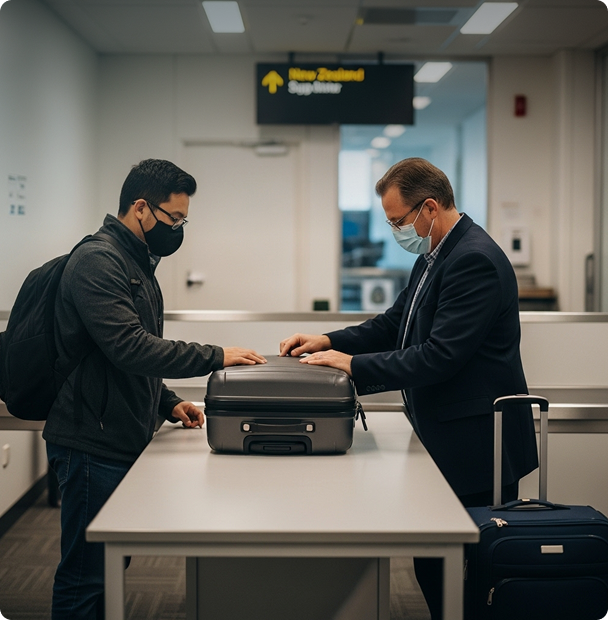
New Zealand has very strict biosecurity procedures to protect our beautiful land
One thing that strikes first time travellers to New Zealand is how strict our rules are when arriving in New Zealand. This is due to the fact that we have a rich endemic flora and fauna which we are protecting very closely. A rogue seed or bug in your suitcase could have dramatic consequences for the survival of certain species but also on our agricultural industry.
Bringing food, wooden items, or plants is very strictly regulated and everything must be declared on arrival if you want to avoid a hefty fine.
.brxe-ohbzff{
  background-color: #F1F5F9;
}
Can I bring my personal items when I migrate to New Zealand?
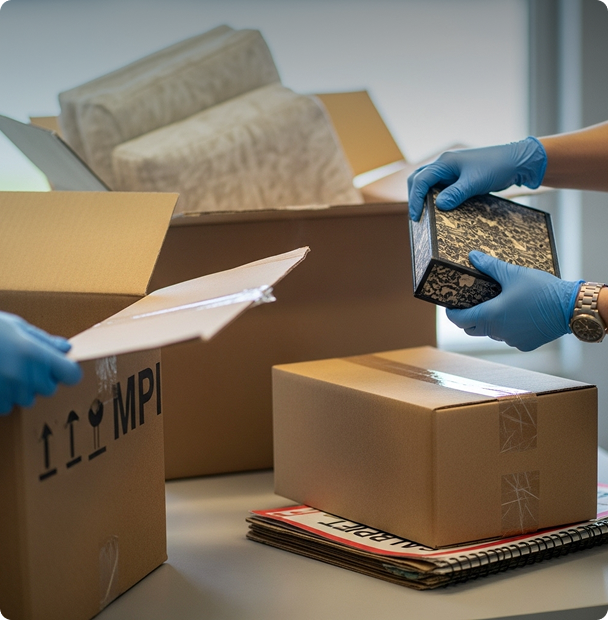
Yes of course, but be aware that your household goods and personal items will be inspected closely at the border to identify any biosecurity risk. Pests and diseases can be brought unintentionally in personal and household effects and risk items will be inspected, and either cleared, treated (heat or fumigation), reshipped, or destroyed. The government agency responsible for this is our Ministry of Primary Industries (MPI).
MPI is responsible for protecting the natural resources, plants, animals and people of New Zealand from the introduction of pests and diseases.
.brxe-mrcdab{
  background-color: #F1F5F9;
}See the Ministry
See the Ministry of Primary Industries’ brochure on importing goods.
Items that you must declare on arrival include:
Fresh & Dried
Animal Protein
Dairy & Eggs
Hunting Items
Herbal & Remedies
Dried Arrangements
Wooden Goods
Seed-Filled Items
Natural Fibres
Animal Materials
Outdoor Equipment
Animal Care Gear
Beekeeping Gear
Animal Accessories
Garden Tools
Furniture
What about my car and other machinery?
If you hold a valid visa valid for at least 12 months, you should not have to pay any customs duty on
your baggage and effects, including ships, aircraft, motor vehicles, and household effects.
You must have owned and used the goods before coming to New Zealand
They must be for your own personal use and not intended for gift or sales
These items are not eligible for concession either: